How to Take Body Measurements and Track Your Progress
The number on the scales isn’t the only one that matters. Your weight on any day is a mix of water, muscle, body fat and the food you’ve eaten, so it can go up and down for reasons that have nothing to do with your progress.
Body measurements fill in more of the picture. Whether you’re working to lose fat, build muscle or simply feel more at home in your body, they show you where the changes are happening.
This guide shows you where to put the tape for the ten places people measure most often, with a photo for each. You don’t need to take them all. Pick the ones that matter for your goal.
Jump to: neck, shoulders, bust, chest, bicep, forearm, waist, hips, thigh, calf.
What you need
All you need is a soft, flexible tape measure, the kind used for sewing. A metal one from the toolbox won’t bend around your body, so the number won’t be right.
Some places are hard to reach with one hand. A body tape measure that hooks into itself to make a loop makes those much easier, and a mirror helps you check the tape is level.
How tight should the tape be?
Snug, but not tight. The tape should sit flat against your skin all the way round, without digging in or leaving a mark. If it’s pressing into you, loosen it a little. If you can slide it up and down easily, tighten it a little.
A few more things help you get the same result every time:
- Measure against bare skin, or over thin, close-fitting clothes
- Keep the tape level with the floor, not dipping at the back
- Stand tall and relaxed, and breathe normally
- For arms and legs, measure the same side each time
How to measure your neck

Wrap the tape around the widest part of your neck. Keep it snug but comfortable, so you can still breathe and swallow easily. Look straight ahead as you read it, because tilting your head changes the number.
How to measure your shoulders
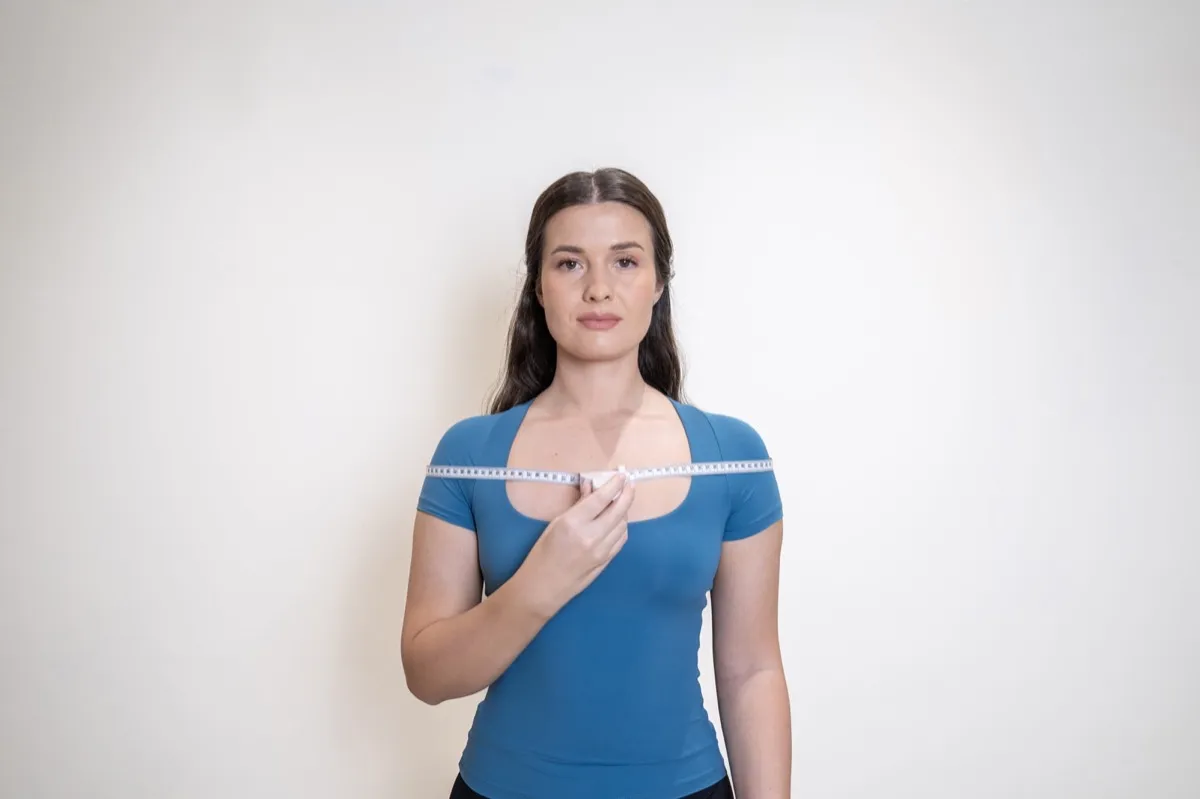
Hold the tape out in front of you, bring it around your back and meet the ends at the front, going over the widest part of both shoulders. Let your arms hang by your sides. This is one of the trickier ones to do alone, so ask someone to help if you can.
How to measure your bust

Measure around your chest at nipple height, keeping the tape level all the way round. Wear the same kind of bra each time, or none, so you’re comparing like with like.
How to measure your chest
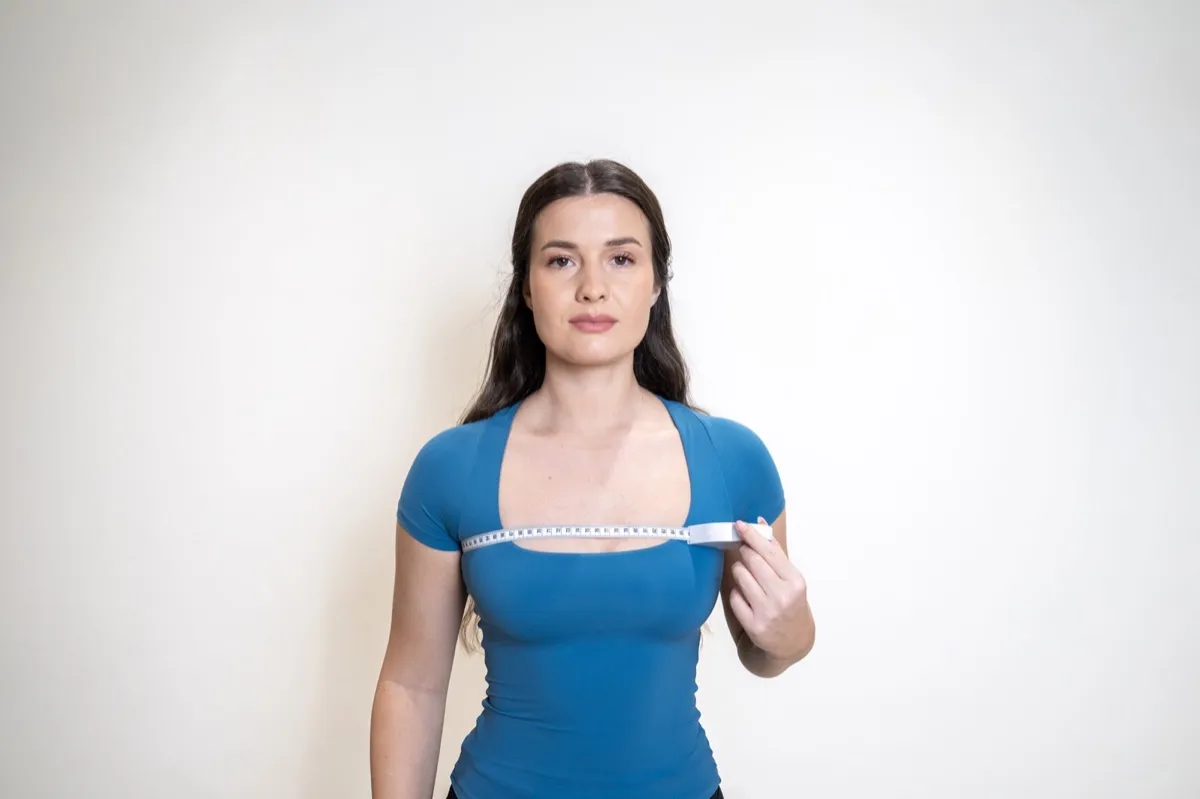
With your arms relaxed by your sides, measure around the fullest part of your chest, just under your armpits. Breathe normally as you read the tape.
Bust or chest? Many people only track one. Choose the one that suits your body and your goal.
How to measure your bicep

Let your arm relax by your side and measure around the fullest part of your upper arm. No need to flex. If you’d rather measure flexed, that’s fine too. Just do it the same way every time.
How to measure your forearm
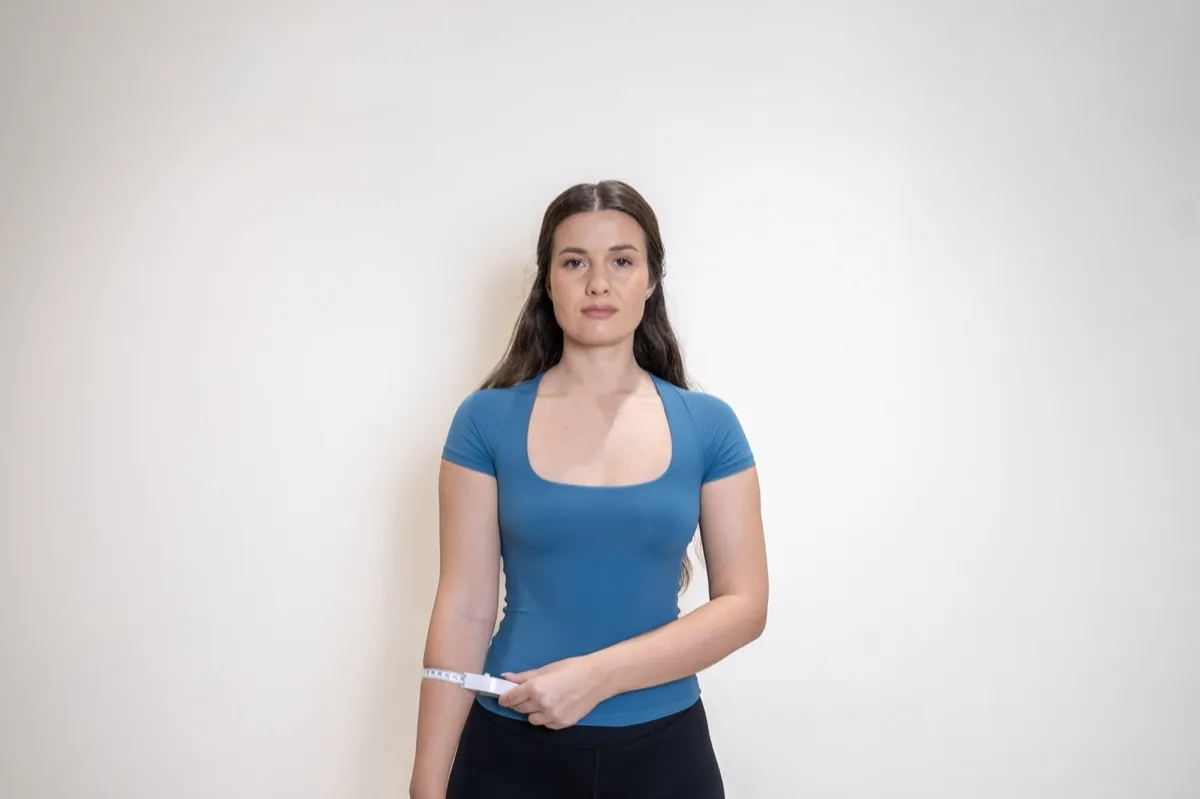
Measure around the fullest part of your arm, just below the elbow. Keep your hand open and relaxed.
How to measure your waist

Find the narrowest part of your torso, just above your belly button, and measure around it. Breathe out normally before you read the tape. There’s no need to hold your tummy in. The real number is the useful one.
If you’re measuring for a health check, the NHS suggests a slightly different spot: halfway between the bottom of your ribs and the top of your hips. Our post on waist circumference covers that in more detail. Once you have your number, you can try our waist-to-height calculator.
How to measure your hips
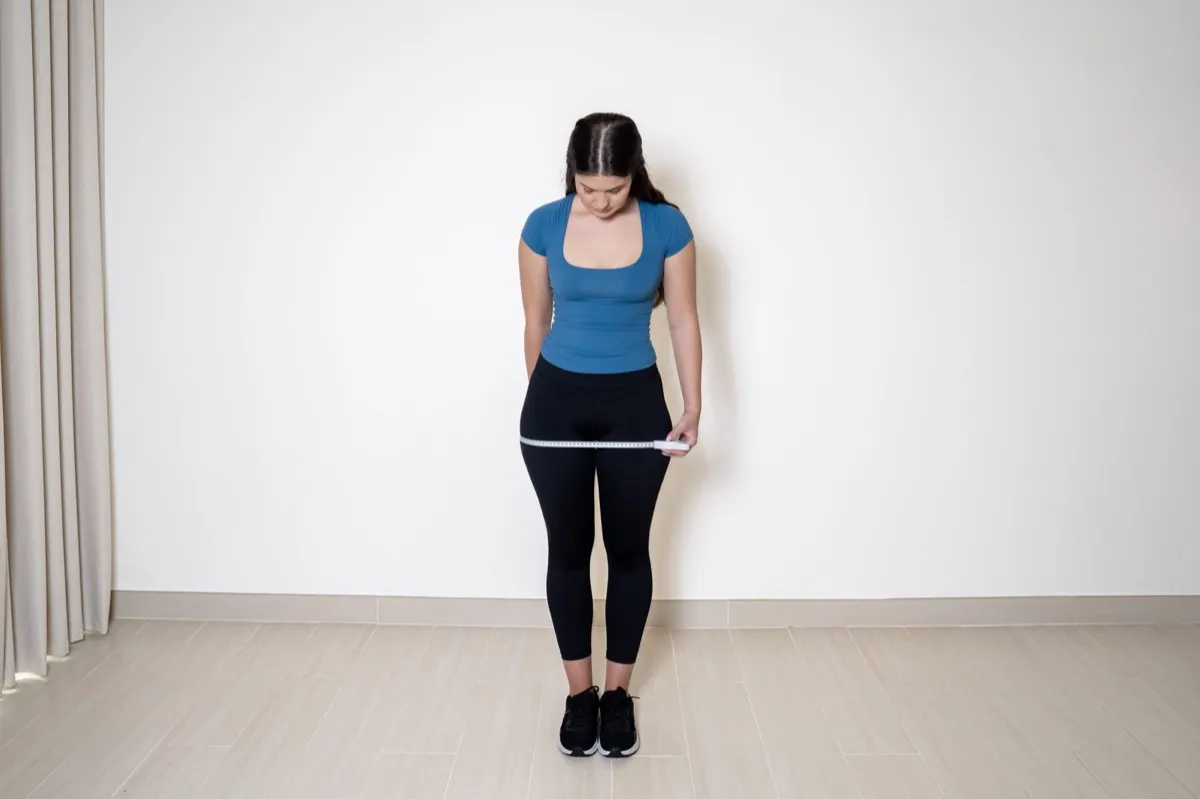
Stand with your feet together and measure around the widest part of your hips. For most people that’s across the fullest part of the bottom. A mirror helps you check the tape is level at the back.
With your waist and hips measured, you can also work out your waist to hip ratio.
How to measure your thigh
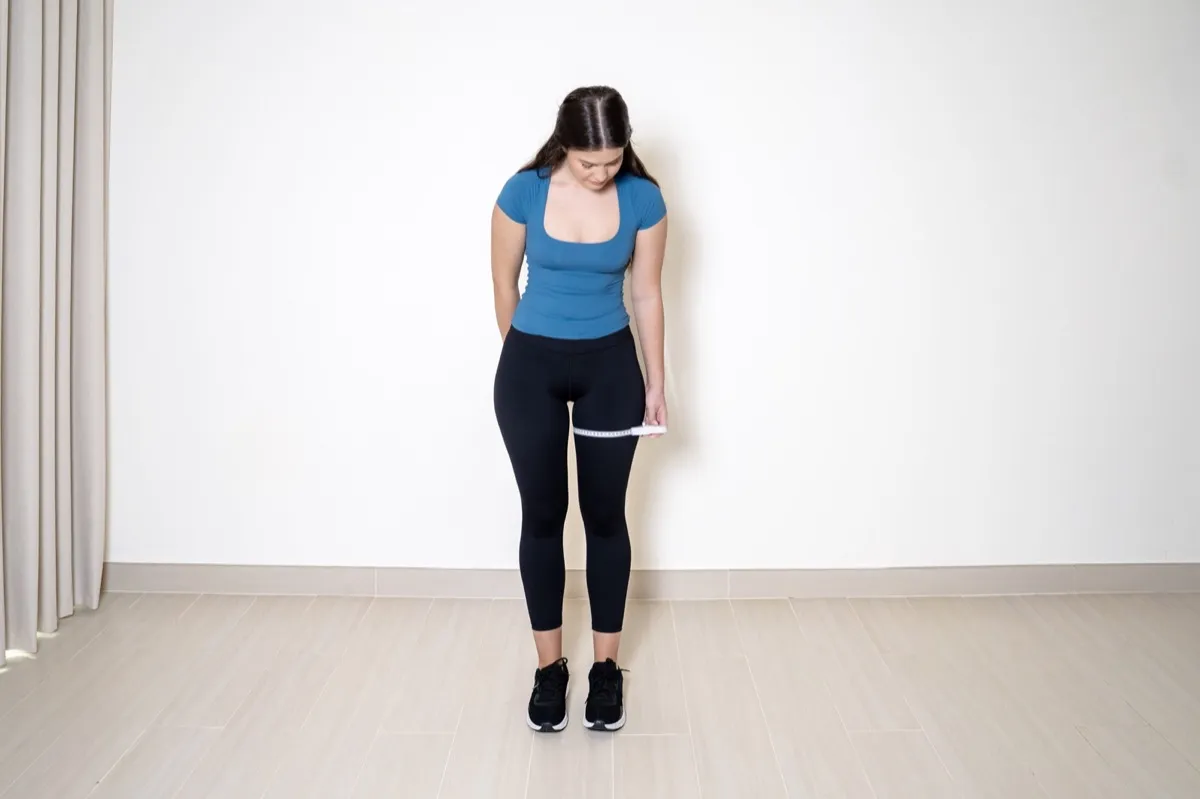
Standing up, measure around the fullest part of your upper leg. Keep your weight on both feet and your leg relaxed.
How to measure your calf

Standing up, measure around the fullest part of your lower leg, below the knee. Keep your weight on both feet, then bend down to read the tape.
When and how often to measure
Your body changes a little through the day, so measure at the same time each time. First thing in the morning, before you eat, works well for lots of people. We’ve written more about when to take your body measurements.
Once a week is a good rhythm. Every two weeks or once a month is fine too. Measurements change more slowly than weight, so measuring every day mostly shows you small ups and downs. Find a routine that feels right for you.
How to track your body measurements
One measurement is just a number. It’s the change over weeks and months that shows your progress, so write each one down as soon as you take it.
You can use a notebook or a spreadsheet. Or you can let Progress do it for you. Add your measurements in a minute or two, see what you measured last time, and watch each one change on a chart. You can set a reminder so you don’t have to remember, and add your weight and progress photos for a fuller picture.
Download Progress from the App Store and take your first set today.
A few last tips
- Choose what matters to you. Not sure where to start? Waist, hips, thighs and biceps are a good set
- Be consistent. The same spot, the same tape and the same time of day matter more than getting it perfect
- Be patient. Some weeks the tape won’t move, and that’s normal. Look at the trend over a month or more
- Be kind to yourself. Every body is different, and every measurement you take is a step forward